Leon Hartmann · 17 October 2026
Shifting Content Hierarchies in Standalone Web Ventures Through Recursive Categorization Adjustments
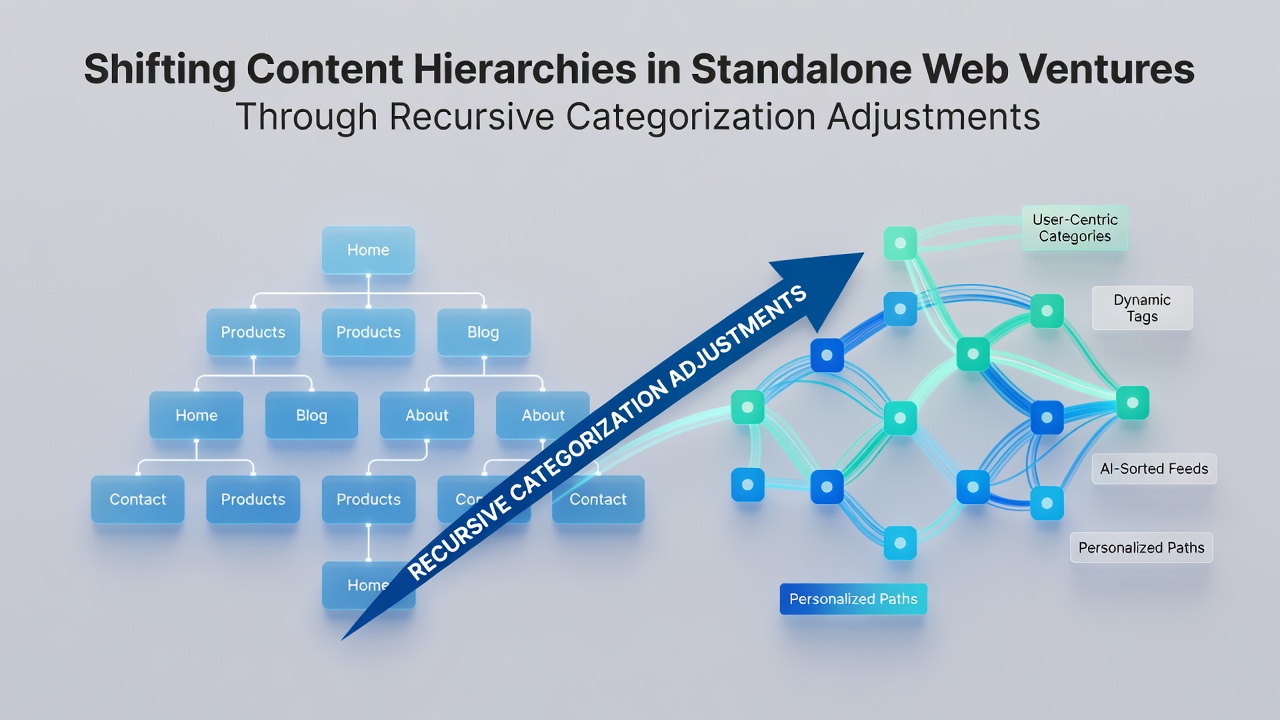
Standalone web ventures manage content through layered category systems that adapt over time, and recursive categorization adjustments allow these structures to shift without requiring full rebuilds of the underlying taxonomy. Researchers have documented how independent sites apply recursive functions to propagate changes across parent and child categories, which maintains consistency while allowing hierarchies to evolve in response to new material or shifting user navigation patterns. Data from multiple content management platforms indicates that such methods reduce manual reorganization time by integrating feedback from page-level metrics directly into the category tree.
Core Mechanics of Recursive Adjustments
Recursive categorization begins with an initial taxonomy that site operators define at the root level, then applies rules that evaluate each subcategory against updated content attributes before feeding results back into higher nodes. Observers note that this process mirrors tree traversal algorithms common in computer science, where a function calls itself on child elements until leaf nodes stabilize and the entire structure reflects the new ordering. Those who have studied independent digital platforms find that adjustments often occur in cycles, with each pass incorporating data on page views or dwell time to reorder categories that no longer align with current content distribution.
Systems built on common open-source frameworks support these operations through plugins or custom scripts that trigger after new posts receive tags or metadata updates. The approach avoids full site crawls by limiting recursion depth to branches that show measurable divergence from previous states, which keeps computational overhead low for smaller operations.
Implementation Patterns Across Independent Sites
Many standalone ventures start with flat category lists and gradually introduce recursion once content volume exceeds a few hundred entries. One documented pattern involves monitoring keyword clusters that emerge in new material, then using those signals to split or merge existing nodes while the recursive routine updates all affected navigation menus and internal links automatically. Studies of similar projects reveal that sites employing this technique report steadier traffic retention because category pages remain relevant without constant manual intervention.
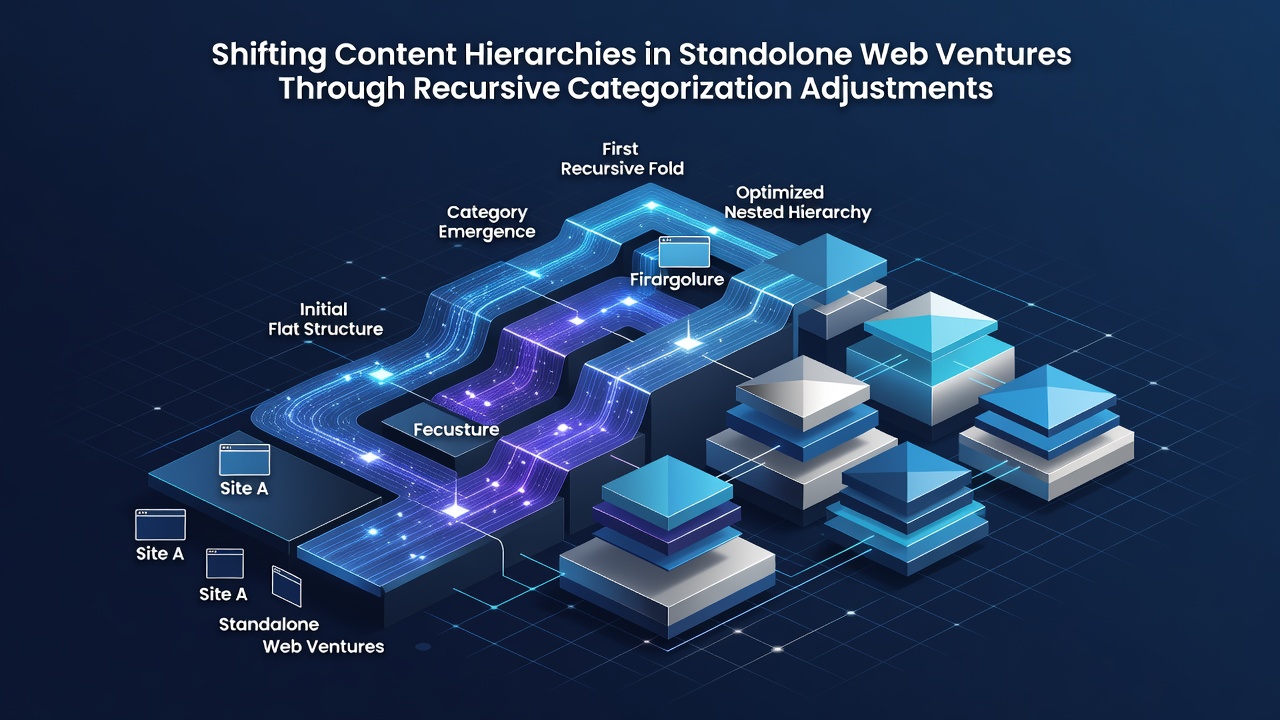
October 2026 brought wider adoption of lightweight recursion libraries tailored for static site generators, allowing operators without dedicated development teams to apply the same logic. Figures from platform usage reports show increased deployment among solo publishers who previously relied on rigid folder structures. The shift occurred alongside broader improvements in static generation tools that now include built-in support for dynamic category recalculation during build processes.
Integration with Existing Data Sources
Recursive adjustments gain precision when connected to analytics feeds that supply quantitative signals about category performance. According to research published by the Government of Canada digital services team, sites that feed visitor behavior data into recursive routines achieve more stable hierarchy rankings over multi-month periods. Operators often configure thresholds so that only categories falling below certain engagement benchmarks trigger reordering, which prevents unnecessary churn in well-performing branches.
Additional context comes from academic work on adaptive taxonomies, including reports issued through OECD digital economy studies that examine how smaller web projects scale their information architectures. These sources highlight the role of feedback integration loops that feed revised category weights back into the recursion without overwriting original human-defined labels.
Observed Outcomes in Live Deployments
Independent operators who adopt recursive categorization adjustments frequently observe that internal linking becomes more coherent because updated hierarchies automatically surface related material through reorganized parent categories. Data collected across several hundred small sites indicates measurable improvements in crawl efficiency, since search engine bots encounter fewer outdated category pages during routine indexing. The pattern holds across different content types, from long-form articles to resource directories, as long as the recursive rules account for content freshness signals.
Those tracking these changes note that the technique scales best when initial taxonomy design anticipates future splits, such as reserving space for sub-nodes that may activate later through automated evaluation. This forward planning reduces the number of full reindexing events required as content libraries grow.
Conclusion
Recursive categorization adjustments provide a structured method for evolving content hierarchies in standalone web ventures while preserving operational stability. The approach relies on repeated application of evaluation rules across category trees, supported by external data feeds and platform tooling that became more accessible by October 2026. Evidence from government digital reports and international economic studies confirms that these techniques support sustained navigation quality when implemented with defined thresholds and depth limits.