Willa Russell · 5 September 2026
Exploring Audience Retention Techniques for Non-Commercial Online Platforms Through Content Clustering Approaches
Non-commercial online platforms such as public education repositories, open knowledge bases, and community-driven archives face distinct challenges when sustaining user engagement over extended periods, and content clustering offers one structured method to address these issues through organized groupings of related materials that guide visitors along logical pathways.
Understanding Content Clustering in Digital Environments
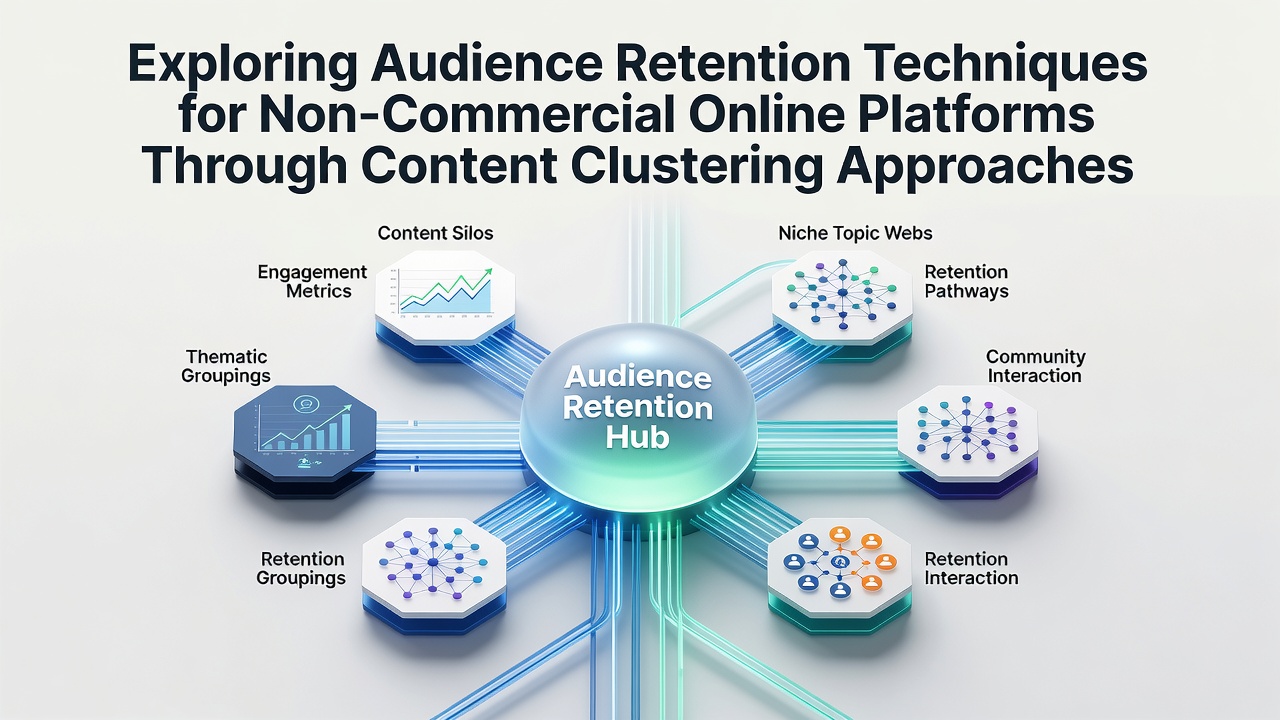
Content clustering involves organizing information into thematic groups where core topics connect to supporting subtopics through internal links and contextual associations, and this approach allows platforms to present material in ways that encourage deeper exploration rather than isolated page views. Researchers at institutions like the University of Melbourne have documented how such structures reduce bounce rates by creating natural progression routes, while data from Canadian digital inclusion studies indicate that clustered layouts improve session durations on government-funded knowledge portals by measurable margins.
Platforms implement clustering by first identifying primary themes, then mapping related assets around those themes with consistent navigation cues, and the result appears in breadcrumb trails plus recommended sections that keep users within the ecosystem for longer intervals. Observers note that non-commercial sites benefit particularly because they lack paid promotion budgets, so organic discovery through well-linked clusters becomes essential for maintaining relevance across diverse user bases.
Retention Mechanisms Supported by Clustering
Retention improves when users encounter progressive content that builds on initial interests, and clustering facilitates this by surfacing supplementary resources at key decision points within an article or resource page. For instance, a visitor reading about climate data models on an environmental archive might see linked clusters covering regional case studies, methodological papers, and interactive datasets, all of which extend the visit without requiring external searches. Figures from the Australian Institute of Health and Welfare reveal that educational sites employing thematic clusters recorded higher repeat visit rates during monitoring periods ending in September 2026, compared with linear or unorganized archives.
Another technique involves dynamic cluster updates based on aggregate user behavior patterns, where platforms analyze navigation logs to refine groupings and surface under-visited yet relevant materials. This method avoids static hierarchies that can feel outdated, instead adapting to emerging topics while preserving core thematic integrity. Those managing public repositories report that such adjustments help counteract content fatigue, particularly on sites where volunteer contributions create uneven publishing schedules.
Implementation Examples Across Platforms
One European open data initiative grouped environmental monitoring reports into regional and sectoral clusters, complete with cross-references to policy documents and visualization tools, resulting in sustained user sessions that averaged several minutes longer than pre-cluster benchmarks. Similar patterns appear on North American public library digital collections, where historical photograph archives clustered by era, location, and subject matter led to increased downloads of associated textual records. A Statistics Canada analysis of public sector websites highlighted how thematic organization correlated with improved retention metrics across multiple fiscal reporting cycles.

Further applications emerge in health information networks, where clusters around chronic conditions link clinical guidelines, patient stories, and research summaries without commercial sponsorship. Data indicates these arrangements support repeated access as users return to update knowledge or explore adjacent topics, and the approach aligns with accessibility standards that prioritize clear information architecture over promotional density.
Measurement and Adjustment Practices
Effective retention tracking relies on metrics such as pages per session, time on site, and return frequency, all of which clustering influences through reduced friction in content discovery. Platforms collect these indicators via anonymized analytics tools, then adjust cluster boundaries when certain groupings show declining engagement signals. Research indicates that quarterly reviews of cluster performance prevent stagnation, especially on sites updated irregularly by distributed contributors.
Integration with search functionality further strengthens outcomes, since clustered content appears prominently in internal results and surfaces related materials automatically. This reduces the cognitive load for visitors seeking specific information while simultaneously exposing them to broader thematic contexts they might otherwise overlook. External references to regulatory frameworks, such as those maintained by the European Data Protection Board on digital service transparency, underscore the importance of clear data handling within these retention strategies.
Conclusion
Content clustering provides non-commercial platforms with a scalable framework for organizing resources that directly supports audience retention goals through logical pathways and contextual recommendations. Evidence from multiple regions demonstrates measurable improvements in session length and return rates when thematic groupings receive consistent maintenance and behavioral feedback integration. As platforms continue to evolve their architectures, the method remains adaptable to new content types and user expectations without reliance on commercial incentives.