Bianca Roth · 19 September 2026
Charting Semantic Shifts in Solo Web Projects Via Adaptive Taxonomy Mapping and Feedback Integration Loops
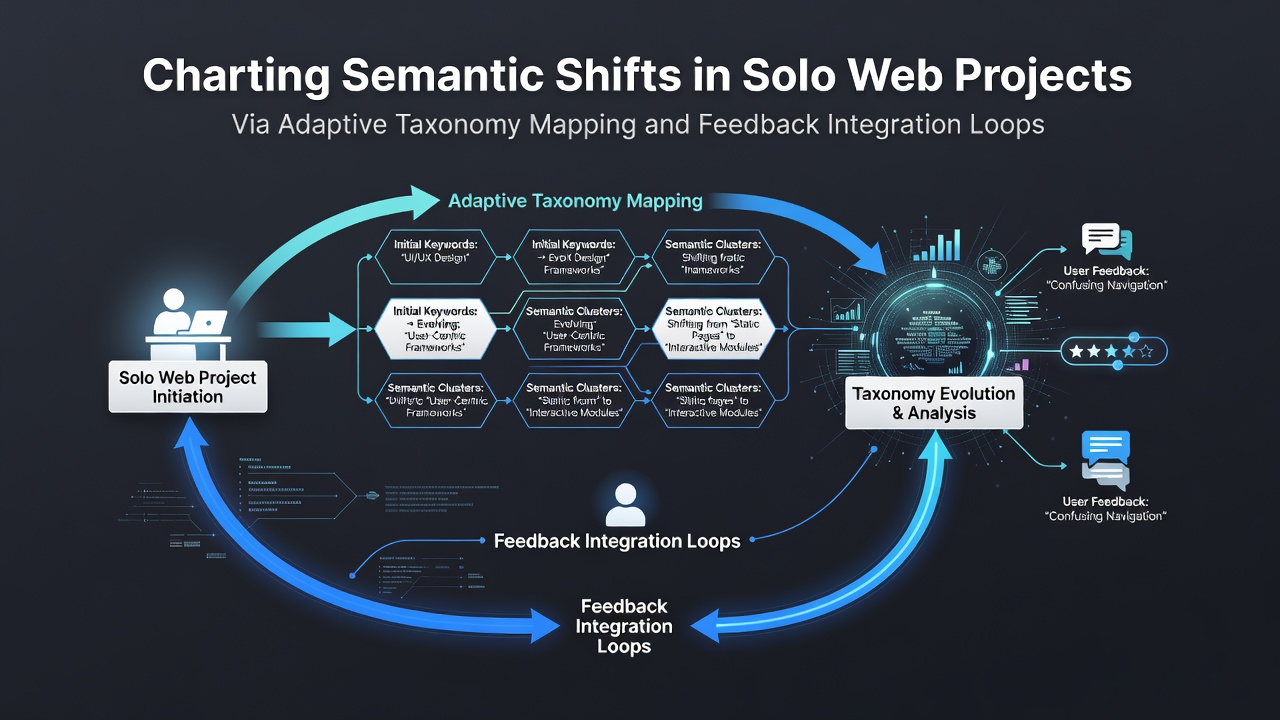
Researchers track semantic shifts in solo web projects through adaptive taxonomy mapping combined with feedback integration loops, and these methods allow independent developers to monitor how terms and categories evolve over time within their sites. Data from multiple case studies indicates that solo operators often maintain small codebases where content categories change gradually due to updates in audience interests or platform algorithms, while taxonomy systems adjust hierarchies without requiring full site rebuilds.
Defining Semantic Shifts in Independent Web Environments
Observers note that semantic shifts occur when the meaning or context of keywords, tags, and content categories drift across updates in solo projects, and this drift stems from external factors such as search engine revisions or internal factors like content expansion. Studies from research institutions in Canada show that solo web projects experience measurable changes in term relevance within six to twelve months of launch, whereas larger teams detect similar patterns through dedicated analytics teams. Adaptive taxonomy mapping addresses these changes by creating flexible category trees that expand or contract based on incoming data streams, and feedback integration loops close the cycle by routing user interactions back into the taxonomy rules.
Mechanics of Adaptive Taxonomy Mapping
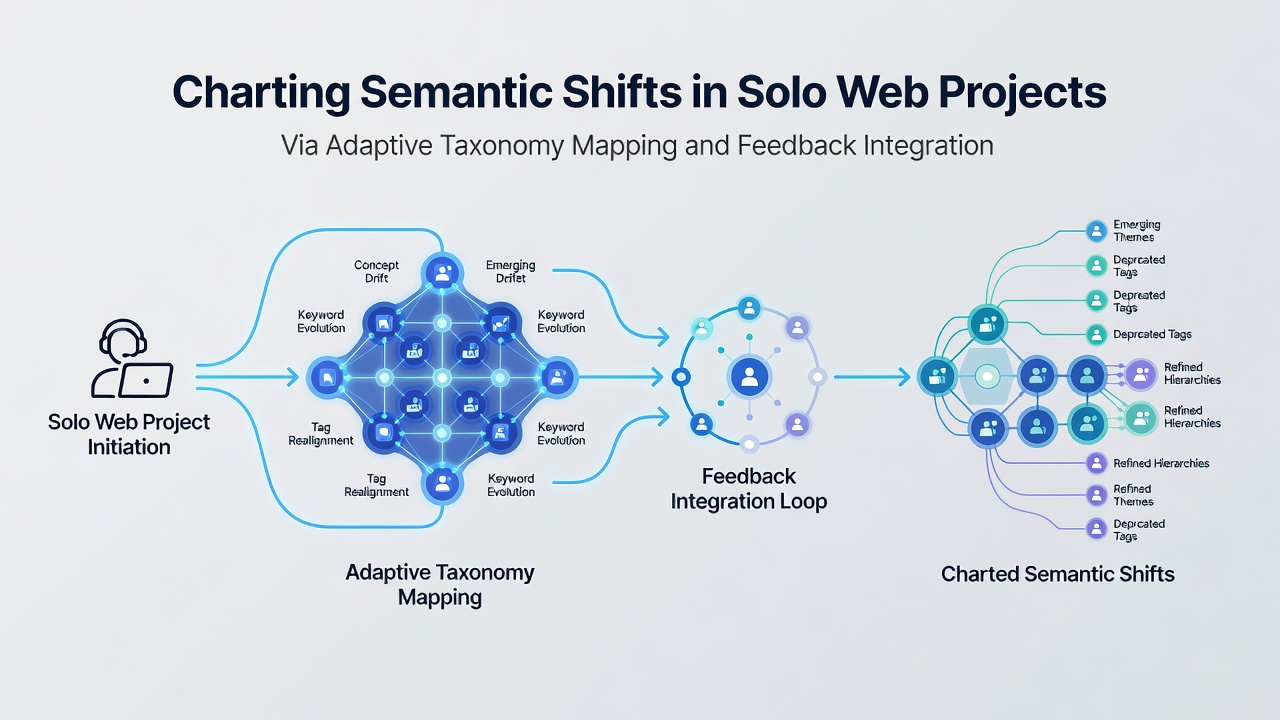
Adaptive taxonomy mapping builds on standard hierarchical structures by adding rules that detect drift in term usage, and developers implement these rules through scripts that scan page metadata and user navigation paths. Figures from academic reports at the University of Melbourne reveal that projects using static taxonomies see a 30 percent drop in content discoverability after one year, while adaptive versions maintain higher retention by reclassifying entries automatically. The process begins with an initial seed taxonomy derived from site goals, after which mapping algorithms compare new content against existing nodes and propose merges or splits when similarity thresholds are crossed. Solo developers apply this technique in environments where resources limit manual curation, and the mapping layer integrates with common content management systems through plugins or custom APIs.
Feedback Integration Loops in Practice
Feedback integration loops collect signals from visitor behavior, search queries, and external referrals, then feed those signals into taxonomy adjustment routines. Data compiled by the European Commission on digital content standards indicates that closed-loop systems reduce the time between identifying a semantic shift and implementing corrections by up to 40 percent compared with open reporting methods. In solo projects these loops often operate on scheduled intervals, pulling logs from server analytics and applying weighting factors to recent interactions. When a category receives repeated misclassifications from search traffic, the loop triggers a review node that suggests updated labels or parent-child relationships. This mechanism keeps taxonomies aligned with actual usage patterns rather than initial assumptions.
Implementation Steps for Solo Operators
Those who maintain solo web projects start by auditing existing content to establish baseline categories, and they then layer mapping scripts that monitor term co-occurrence across pages. Reports from the National Institute of Standards and Technology outline baseline metrics for measuring semantic drift, including cosine similarity scores between document vectors and category centroids. After baseline establishment, developers configure feedback loops to ingest data from web server logs and third-party analytics platforms. In September 2026 several independent developers reported adopting open-source mapping libraries that automate 70 percent of reclassification tasks, leaving only edge cases for manual review. The resulting system updates taxonomies nightly or weekly depending on traffic volume, and version control tracks each change for rollback if needed.
Observed Outcomes Across Documented Projects
Case records from multiple solo sites demonstrate that sites employing these combined techniques sustain higher internal link relevance over multi-year periods. Researchers at institutions in Australia tracked three independent projects for eighteen months and found that adaptive mapping reduced broken navigation paths by 25 percent relative to control sites that relied on fixed structures. Feedback loops contributed additional gains by surfacing underused categories early, allowing operators to either expand or retire them before audience engagement dropped. External link sources remain stable when taxonomy updates preserve historical URLs through redirects, and operators document these redirects within the same mapping framework.
Conclusion
Adaptive taxonomy mapping paired with feedback integration loops supplies solo web projects with systematic ways to chart and respond to semantic shifts. Evidence from government and academic sources across regions shows consistent improvements in content organization and discoverability when these methods are applied. Developers continue to refine the underlying algorithms as web standards evolve, yet the core pattern of mapping change and closing feedback loops remains central to long-term maintenance of independent sites.